Destacar:
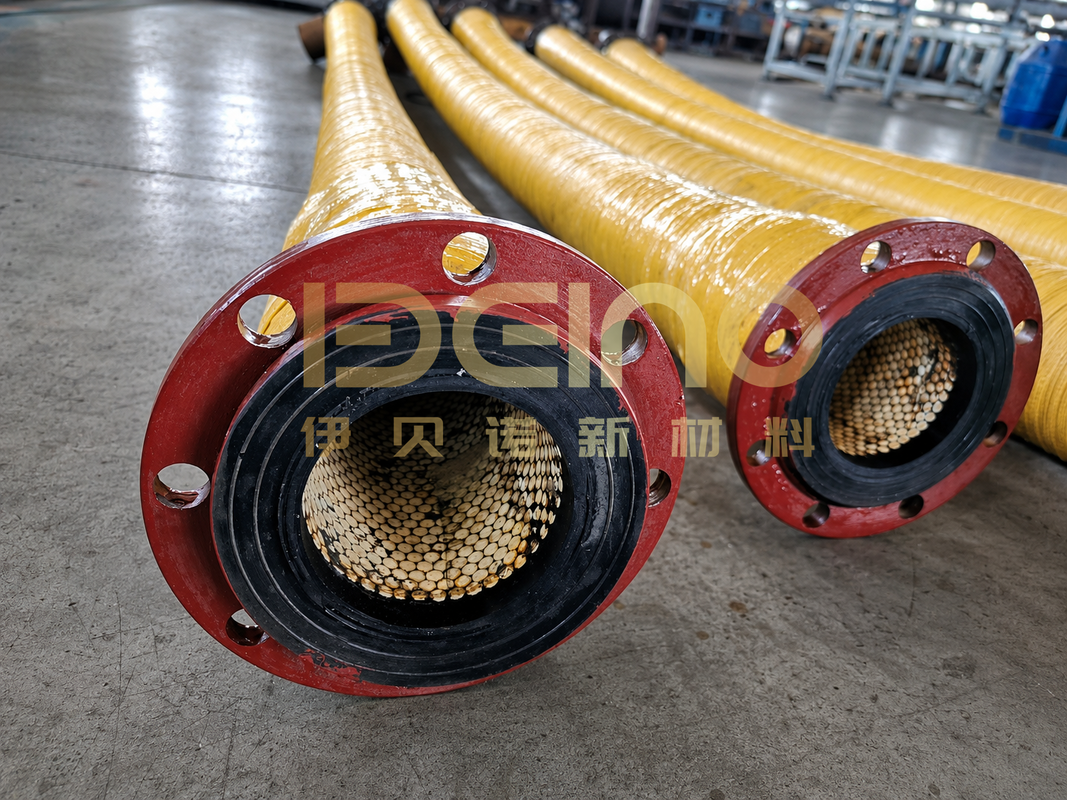
Mangueira de Borracha Revestida de Cerâmica para Portos
, Mangueira de Borracha Revestida de Cerâmica 85 HRA
Mangueira de Borracha Revestida de Cerâmica para Transferência de Areia Abrasiva em Portos
Introdução do produto
Em um porto, uma mangueira raramente é substituída porque todo o revestimento de borracha está desgastado uniformemente.ou uma secção curta atingida por um fluxo de material concentradoUma vez que esse ponto se desgasta, a linha de transferência pára, embora a maior parte da mangueira ainda possa parecer útil.
Um tubo rígido revestido de cerâmica pode suportar a abrasão severa, mas nem sempre pode acomodar vibrações, desvio de alinhamento ou movimento limitado do equipamento.ainda deixa borracha diretamente exposta à areiaElacera é uma mangueira de borracha revestida de cerâmica para as posições em que ambos os problemas ocorrem ao mesmo tempo.
A mangueira utiliza segmentos de cerâmica de alta alumina separados em vez de um tubo de cerâmica contínuo.para que o conjunto possa dobrar dentro do seu raio de curvatura aprovadoÉ normalmente utilizado como uma ligação flexível específica, não como um substituto para cada tubo de aço no sistema.
Onde esta mangueira merece o seu lugar
|
Ponto de instalação
|
Por que a mangueira de cerâmica é considerada
|
O que o comprador deve verificar
|
|
Descarga da bomba ou do equipamento
|
A abrasão e a vibração ocorrem na mesma ligação
|
Picos de pressão, suporte da mangueira e alinhamento da flange
|
|
Deslocamento curto entre tubos fixos
|
Uma bobina rígida é difícil de alinhar
|
Comprimento disponível e raio de curva mínimo
|
|
Curvatura de transferência de areia ou agregado
|
Concentração do caudal no raio exterior
|
Tamanho, velocidade e disposição da curvatura das partículas
|
|
Conexão removida com frequência
|
A manutenção requer uma secção flexível desmontável
|
Perforação de flanges, peso unitário e espaço de elevação
|
Se a mangueira existente falhar repetidamente na mesma área, a aplicação deve ser feita em um ponto flexível conhecido de alto desgaste.As fotografias do furo desgastado e do roteamento instalado são muitas vezes mais úteis do que uma descrição geral do material.
Por que o DN sozinho não é suficiente para uma citação
Uma mangueira de descarga de pressão positiva que transporta areia molhada não é o mesmo produto que uma mangueira de vácuo usada para sucção.Um conector de suporte curto também é diferente de uma mangueira longa que deve carregar seu próprio peso entre dois pontos.
Para o serviço portuário, a primeira cotação deve indicar se o material está seco ou misturado com água, o tamanho de partícula esperado, a pressão normal e máxima, a temperatura, a curva instalada,padrão de flangeSe for necessário aspirar, flutuar, arrastar ou ter uma blindagem externa, deve ser indicado no início;Estas características não fazem parte de uma mangueira de descarga padrão revestida de cerâmica.

Dados típicos do produto
|
Ponto
|
Valor típico ou opção |
| Revestimento cerâmico |
Segmentos cerâmicos de alumínio a 95% |
| Densidade cerâmica típica |
Aproximadamente 3,75 g/cm3 |
| Dureza de Rockwell |
≥ 85 HRA |
| Resistência à compressão |
≥ 850 MPa |
| Pressão de trabalho |
1.0·2.5 MPa, de acordo com a identificação da mangueira e o reforço |
| Temperatura de funcionamento |
Até 100 °C, dependendo do composto de borracha escolhido |
| Duração |
Personalizado; geralmente 10×20 m se o tamanho e o manuseio permitirem |
| Conexões finais |
Flancas sob medida ou acessórios específicos de projeto |
| Radius de curvatura |
Definido no desenho homologado para cada tamanho de mangueira |
A pressão, o diâmetro exterior, o peso unitário e o raio de curvatura mínimo são finalizados para o tamanho real.
O que acontece dentro da mangueira
A areia deslizando ao longo de um buraco de borracha gradualmente remove o material, em uma curva, as partículas continuam em sua direção original e atingem o raio exterior com mais força.ou uma ligação desalinhada pode tornar o fluxo ainda menos uniformeA camada cerâmica proporciona ao material uma superfície resistente ao desgaste, enquanto a borracha circundante suporta os segmentos e absorve o movimento normal.
Uma mangueira forçada abaixo do seu raio de curvatura mínimo pode achatar localmente, perturbar o fluxo e sobrecarregar a estrutura.Puxar flanges desalinhados juntos com a mangueira pode criar o mesmo problema antes mesmo de começar a transportar.
Seis detalhes a aprovar antes da produção
·Diâmetro interno claro através da secção revestida de cerâmica
·Comprimento total e curva instalada
·Pressão normal, pressão máxima e qualquer exigência de pressão de ensaio
·Diâmetro externo da flange, padrão do buraco do parafuso, face de vedação e orientação
·Requisito de borracha para exposição ao ar livre, óleo ou produtos químicos
·Método de suporte para que o peso da mangueira não seja suportado pelas flanges
Para um trabalho de substituição, enviar a folha de dados da mangueira antiga, juntamente com fotografias da instalação.A causa real pode ser o caminho de fluxo em vez de apenas a qualidade da borracha.
Inspecção, embalagem e fornecimento
A Hunan Yibeinuo New Material Co., Ltd. fabrica produtos de desgaste com revestimento cerâmico Elacera de acordo com os desenhos do cliente.A perfuração da flange e a condição do revestimento visível são verificadas em relação ao documento homologadoOs ensaios de pressão podem ser incluídos no plano de inspecção quando especificados na ordem.
As mangueiras longas ou pesadas são apoiadas durante a embalagem para evitar que sejam dobradas num raio inadequado.e método de transporte.
Perguntas Frequentes
Esta mangueira pode ser usada para sucção de areia?
Uma mangueira de descarga de pressão positiva não deve ser tratada como uma mangueira de sucção.
Pode substituir um tubo de aço revestido de cerâmica?
Pode substituir secções flexíveis ou offset selecionadas.
Como é determinado o raio mínimo de curva?
Depende do diâmetro da mangueira, do traçado do segmento cerâmico, do reforço e do comprimento.
Consegues igualar uma flange existente?
Envie um desenho completo da flange ou o padrão, classe de pressão, diâmetro exterior, detalhes do buraco e requisitos de vedação.
Qual é a maneira mais rápida de obter uma cotação precisa?
Envie o material, o tamanho das partículas, a pressão, a temperatura, a identificação da mangueira, o comprimento, a curva instalada, o desenho da flange e as fotografias da ligação atual.
Ainda a substituir a mesma mangueira?
Envie à Elacera as fotos da mangueira avariada e o desenho da ligação.Vamos rever se o local precisa de uma mangueira flexível revestida de cerâmica, uma bobina de desgaste rígida, ou uma estrutura diferente.

 Por favor verifique seu email!